GK: Why do car speedometers go up to 220 km/h even though you can't drive that fast?
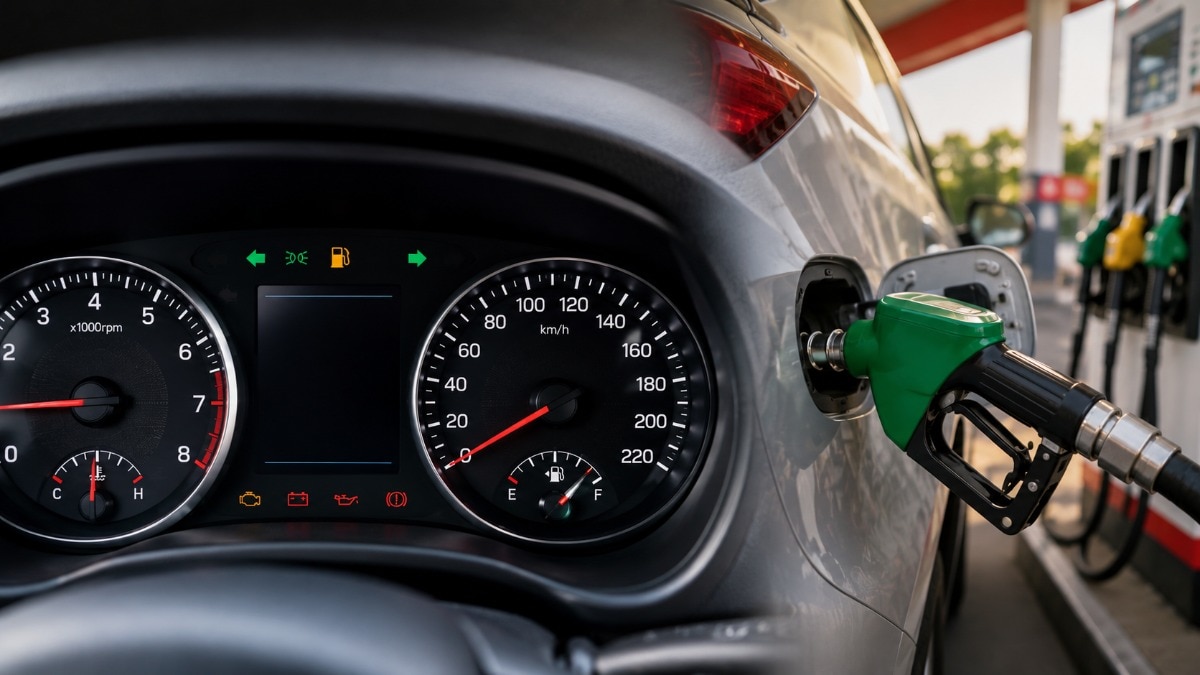
Ever noticed that even a modest hatchback capable of a top speed of around 150 km/h often has a speedometer that stretches all the way to 220 km/h or even 240 km/h? It’s a detail most drivers overlook, but there’s a fascinating reason why carmakers do it.The biggest reason is standardisation. Instead of designing a different speedometer for every variant of a car, manufacturers often use the same instrument cluster across multiple models. A higher-performance version of the same vehicle may actually be capable of much higher speeds, making it more economical to use one speedometer for the entire range.There’s also a technical reason. Speedometers are designed to be most accurate in the speed range where people drive the most—typically between 40 km/h and 120 km/h. If the dial ended at 140 km/h, the markings would be packed too closely together, making it harder to read your speed quickly. Extending the scale to 220 km/h allows for better spacing and easier readability.Psychology plays a role too. For decades, automakers have associated higher numbers with performance. Even if a car can never reach 220 km/h, a speedometer with a higher limit subtly gives the impression of a more capable, premium vehicle. It’s one reason sports cars often have speedometers reading 300 km/h or more, even though very few owners will ever see those speeds.In India, the reality is very different. Most expressways have speed limits ranging from 100 to 120 km/h, while city roads allow much lower speeds. Driving anywhere close to 220 km/h would not only be illegal on public roads but also extremely dangerous. In everyday use, most drivers spend almost all their time well below the halfway mark on the dial.So, the next time you glance at your car’s speedometer and wonder why it promises speeds you’ll probably never achieve, remember: it’s less about encouraging fast driving and more about manufacturing efficiency, better instrument design and a little bit of automotive psychology. It’s one of those tiny details hiding in plain sight that most of us never stop to question.
2026-08-04T14:26:36Z

BMW's new concept car looks like regular sedan but is designed to stop bullets | In pics
Hidden armour: BMW has unveiled the Concept 7 Protection, a luxury armoured sedan designed to protect occupants against selected handgun threats while retaining the appearance of the standard 7 Series. The concept targets private and corporate customers seeking discreet security against everyday and unpredictable risks. BMW has integrated the protective features into the vehicle to preserve its comfort, appearance and driving dynamics. Protection levels: The BMW Concept 7 Protection expands BMW’s range of security vehicles, sitting below the BMW 7 Series Protection and BMW X5 Protection VR6 in terms of its intended protection requirements. The existing BMW 7 Series Protection offers VR9 protection, with VPAM 10 available as an option. The concept instead focuses on customers who require protection against specific handgun threats rather than higher-level security risks. Bullet resistance: The concept features thicker bullet-resistant glass than the standard 7 Series, along with ballistic steel and fibre-reinforced composites integrated into the doors. Additional protective elements cover the rear triangular windows, roof, bulkhead and rear wall. The protection system is designed to cover vulnerable areas around the doors, glazing and bodywork while preserving the sedan’s familiar exterior appearance. Handgun threats: The BMW Concept 7 Protection complies with the new BayB standard and is designed to protect against selected handgun ammunition, including 9×19 mm and .44 Magnum rounds. BMW says the vehicle is intended for situations involving violent attacks, threats during road travel and uncertain security conditions. It is not designed to provide blast protection, which requires a vehicle with a higher level of protection. 612 hp output: Based on technology from the BMW M760e xDrive, the concept uses a plug-in hybrid powertrain combining a 3.0-litre six-cylinder petrol engine with an electric motor integrated into an eight-speed Steptronic transmission. The system produces a combined output of 450 kW (612 hp) and maximum torque of 800 Nm. BMW xDrive intelligent all-wheel drive completes the powertrain setup. Driving dynamics: BMW has calibrated the chassis, brakes, powertrain and driver assistance systems to account for the additional protection equipment. The company says this integrated approach is intended to retain a driving experience similar to that of a standard production 7 Series. The concept combines certified protection with the comfort and driving characteristics of BMW’s luxury sedan. Private cabin: The interior features BMW Individual Merino leather upholstery, Alcantara trims and sun protection glazing. Electronically operated sunblinds provide additional privacy, while a digital interior mirror improves rearward visibility. The cabin retains the spacious layout and comfort associated with the 7 Series, with the protective elements integrated into the vehicle rather than displayed prominently. Rear-seat upgrade: The concept showcases a BMW Individual rear console with a foldable table, wireless charging tray and cool box. BMW says the rear console will be available for the standard 7 Series during the second half of 2027. The feature adds workspace and storage for rear passengers, complementing the concept’s focus on comfort and discreet security. Added security: An intercom system allows occupants to communicate with people outside the vehicle while keeping the doors and windows closed. It uses interior and exterior microphones and loudspeakers, alongside an attack alarm system that provides visual and audible alerts. The front and rear side windows can be operated electronically but cannot be fully opened. Production plans: BMW says the Concept 7 Protection provides a preview of a possible expansion of its protection vehicle portfolio for additional customer groups. Selected European markets are the initial focus. The company has not announced a production decision, launch timeline or pricing for the concept.
2026-10-14T05:02:45Z

They started drifting in the middle of the road - then the police showed up
Tokyo's car culture is more than famous parking areas, JDM icons, and scenes from Tokyo Drift. This video dives deep into the city's real automotive underground, from Daikoku meets and tuning shops to C1 highway runs, JDM low riders, drift circuits, and late-night street drifting. Along the way, local drivers, builders, and scene veterans reveal how Tokyo's car culture has changed, why it still survives, and what it takes to find the action hidden beneath the surface.
2026-07-06T14:36:16Z